

+918048068082

Currently it only shows your basic business info. Start adding relevant business details such as description, images and products or services to gain your customers attention by using Boost 360 android app / iOS App / web portal.

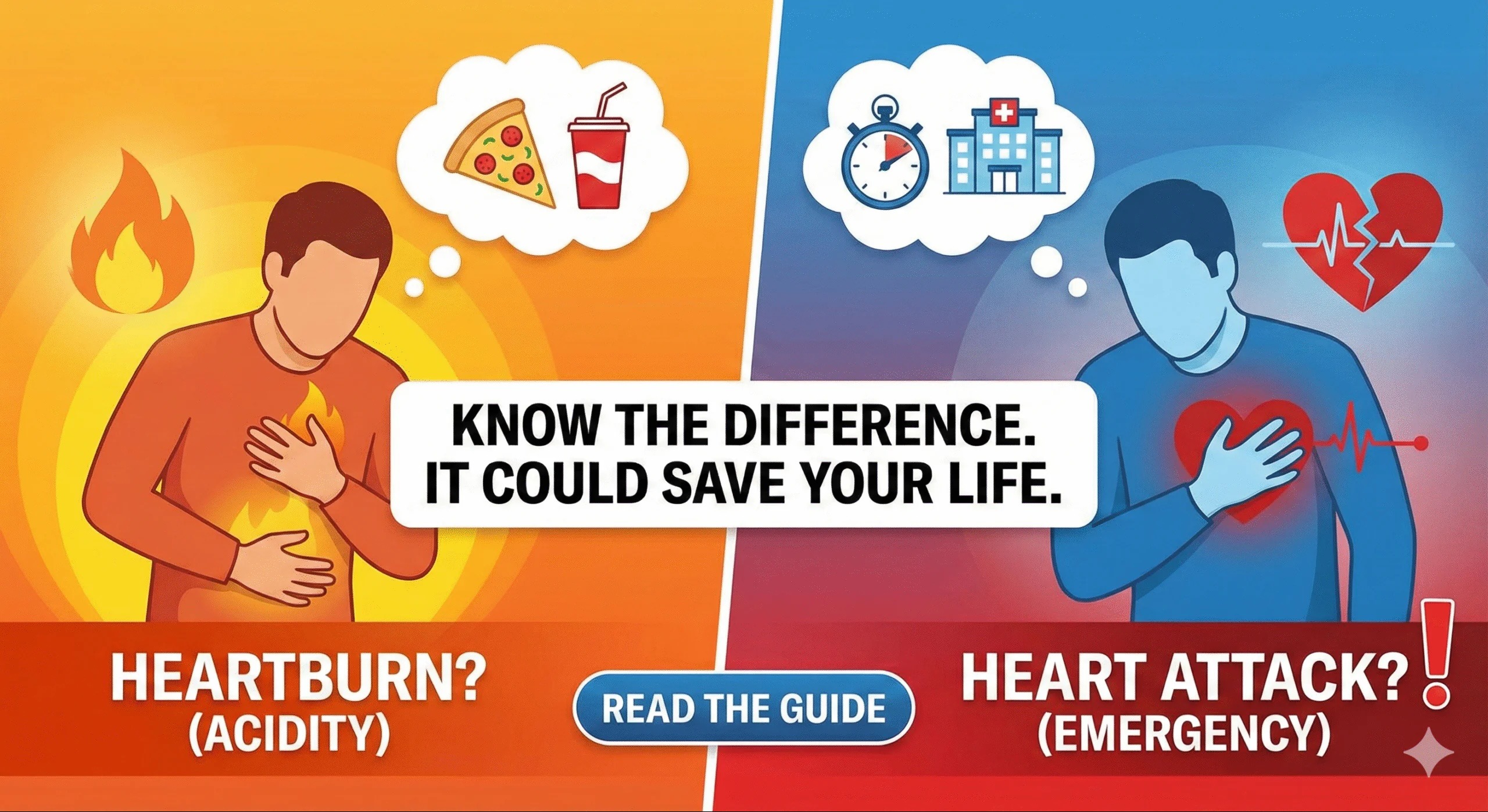
It is a familiar scenario in many households across South India: after a heavy dinner, a late-night cup of strong filter coffee, or a long day at work, a sharp or burning sensation develops in the chest. The immediate reaction for most people is to reach for an antacid, drink a glass of warm water, or lie down, assuming it is 'just gas.' While acid reflux and indigestion are exceptionally common, dismissing chest discomfort as acidity without proper evaluation can be a dangerous gamble. The challenge lies in how closely the esophagus and the heart are positioned inside the chest, sharing similar nerve pathways that make it difficult for the brain to distinguish where the pain is actually coming from. --- ### Quick Summary: Key Differences at a Glance | Feature | Gastric / Acidity Pain | Heart Attack / Cardiac Pain | | --- | --- | --- | | **Sensation** | Burning, scalding, or sharp discomfort behind the breastbone | Heavy pressure, squeezing, tightness, or a 'crushing' feeling | | **Location** | Mid-chest, upper abdomen, or rising up toward the throat | Behind the breastbone; often radiates to the left arm, neck, jaw, or back | | **Triggers** | Heavy, oily, or spicy meals; lying down flat immediately after eating | Physical exertion, climbing stairs, emotional stress, or extreme heat | | **Relief Factors** | Antacids, belching, or sitting upright | Rest or sublingual cardiac medication (partial/temporary) | | **Associated Signs** | Sour burps, bloating, or an unpleasant acidic taste in the mouth | Cold sweating, unexplained dizziness, or sudden shortness of breath | > **Golden Rule:** If chest discomfort is new, unusually heavy, or accompanied by cold sweating or difficulty breathing, treat it as a potential medical emergency until proven otherwise. --- ## Why Gas Pain and Heart Pain Feel So Similar To understand why people frequently confuse indigestion with cardiac pain, it helps to look at human anatomy. Both the heart and the esophagus (the food pipe) receive nerve supply from the same autonomic nerve network (*visceral pain nerves*). When either organ is under distress—whether from severe acid irritation or lack of oxygen supply to the heart muscle—the brain processes these pain signals through overlapping channels. Furthermore, dietary habits common in urban lifestyles—such as late-night dinners, heavy consumption of fried snacks (*vadas*, *bajjis*), high-oil curries, or excessive caffeine intake—frequently trigger legitimate acid reflux. Because indigestion is a frequent experience for many, a genuine cardiac event can easily be misattributed to a routine bout of 'gas trouble.' --- ## Gas Pain vs. Heart Attack Symptoms Side-by-Side Understanding how these conditions present can help you identify warning signs when discomfort strikes. ### 1. The Quality of the Pain * **Acidity Discomfort:** Typically described as a burning or 'hot' sensation right behind the breastbone. It may travel upward toward the throat and worsen when bending forward or lying flat on your back. * **Cardiac Discomfort:** Often described as a heavy weight, tightness, squeezing, or a feeling like an 'elephant sitting on the chest.' It is rarely a sharp or localized point that can be pinpointed with a single finger. ### 2. Associated Symptoms * **Acidity Signs:** Acidic or sour regurgitation, frequent belching, bloating, and a sour taste in the throat. * **Cardiac Red Flags:** Profuse cold sweating (*diaphoresis*), unexplained lightheadedness, nausea without vomiting, and noticeable breathlessness even while resting. --- ## When 'Just Gas' Turns Out to Be a Cardiac Event One of the most critical challenges in clinical cardiology is delayed presentation. Patients often spend hours taking multiple antacids or home remedies before seeking medical evaluation, losing valuable time during an evolving heart attack. ### High-Risk Profiles If you or a loved one belong to any of the following categories, chest pain should never be dismissed as routine indigestion without a formal medical evaluation: * Diagnosis of **Type 2 Diabetes Mellitus** or **Hypertension** * High LDL ('bad') cholesterol levels * History of tobacco use or smoking * Strong family history of early-onset coronary artery disease ### The 'Silent' Heart Attack Myth Patients with long-standing diabetes or elderly individuals may not experience classic crushing chest pain due to diabetic neuropathy, which alters pain sensation. In these cases, a heart attack may manifest as 'atypical symptoms'—such as unexplained extreme weakness, mild indigestion-like discomfort, upper abdominal discomfort, or sudden breathlessness. --- ## 5 Red Flags That Require Emergency Care If you notice any of the following symptoms alongside chest discomfort, go immediately to the nearest emergency room or medical center: 1. **Heavy Chest Pressure:** Squeezing, tightness, or weight in the center or left side of the chest that lasts more than a few minutes. 2. **Radiating Pain:** Discomfort spreading to the left shoulder, left arm, neck, lower jaw, or between the shoulder blades. 3. **Cold Sweating:** Unexplained, profuse sweating even in an air-conditioned room or cool environment. 4. **Sudden Shortness of Breath:** Difficulty catching your breath without any physical exertion. 5. **Dizziness or Faintness:** Sudden lightheadedness, feeling unsteady, or feeling like you might pass out. --- ## How We Evaluate Chest Pain in the Emergency Room When you arrive at an emergency room with chest discomfort, a standard protocol is initiated to rule out life-threatening cardiac causes quickly and safely: 1. **12-Lead ECG (Electrocardiogram):** Typically performed within 10 minutes of arrival to check the heart's electrical activity and detect signs of acute ischemia or arterial blockage. 2. **Cardiac Enzyme Blood Tests (Troponin I or T):** Measures specific proteins released into the bloodstream if heart muscle cells are under stress or damaged. 3. **Echocardiogram (Echo):** An ultrasound of the heart that evaluates wall motion abnormalities and overall heart function (*Ejection Fraction*). 4. **Coronary Angiography:** If non-invasive tests indicate an active or high-risk blockage, an angiogram is performed in the Cath Lab to visualize the coronary arteries and determine if an intervention (such as angioplasty) is needed. --- ## Frequently Asked Questions ### Can taking an antacid stop heart attack pain? An antacid may soothe esophageal burning if you have co-existing acid reflux, but it will **not** relieve pain caused by reduced blood flow to the heart muscle (coronary ischemia) or stop an evolving heart attack. ### Does gas pain cause pain or numbness in the left arm? While severe esophageal spasms can occasionally cause discomfort that radiates slightly, pain or numbness spreading down the left arm paired with chest heaviness is a classic cardiac sign that requires immediate medical evaluation. ### What should I do if I am unsure whether my chest pain is serious? Never wait for symptoms to pass or attempt to self-diagnose when dealing with new or severe chest discomfort. It is always safer to obtain a quick ECG at a medical center to rule out a cardiac event than to delay critical care. --- *Disclaimer: This article is for educational purposes only and should not replace professional medical advice, diagnosis, or emergency treatment. If you are experiencing severe chest pain, shortness of breath, or cold sweating, seek immediate emergency medical care.*


